
Wide-Belt Sanding Platen Inserts: What to Verify Before Switching to a Quick-Change System
Learn how to identify a replacement platen insert, assess a quick-change conversion and prepare an RFQ for a wood panel sanding line.
Before requesting a quick-change platen insert for an MDF or particleboard sanding line, establish whether the sanding head already has the corresponding platen assembly. A confirmed insert reorder can start with the installed part reference. A conversion calls for an engineering review of the sanding head and its interfaces before purchasing defines the scope.
Identify the platen assembly and the insert separately
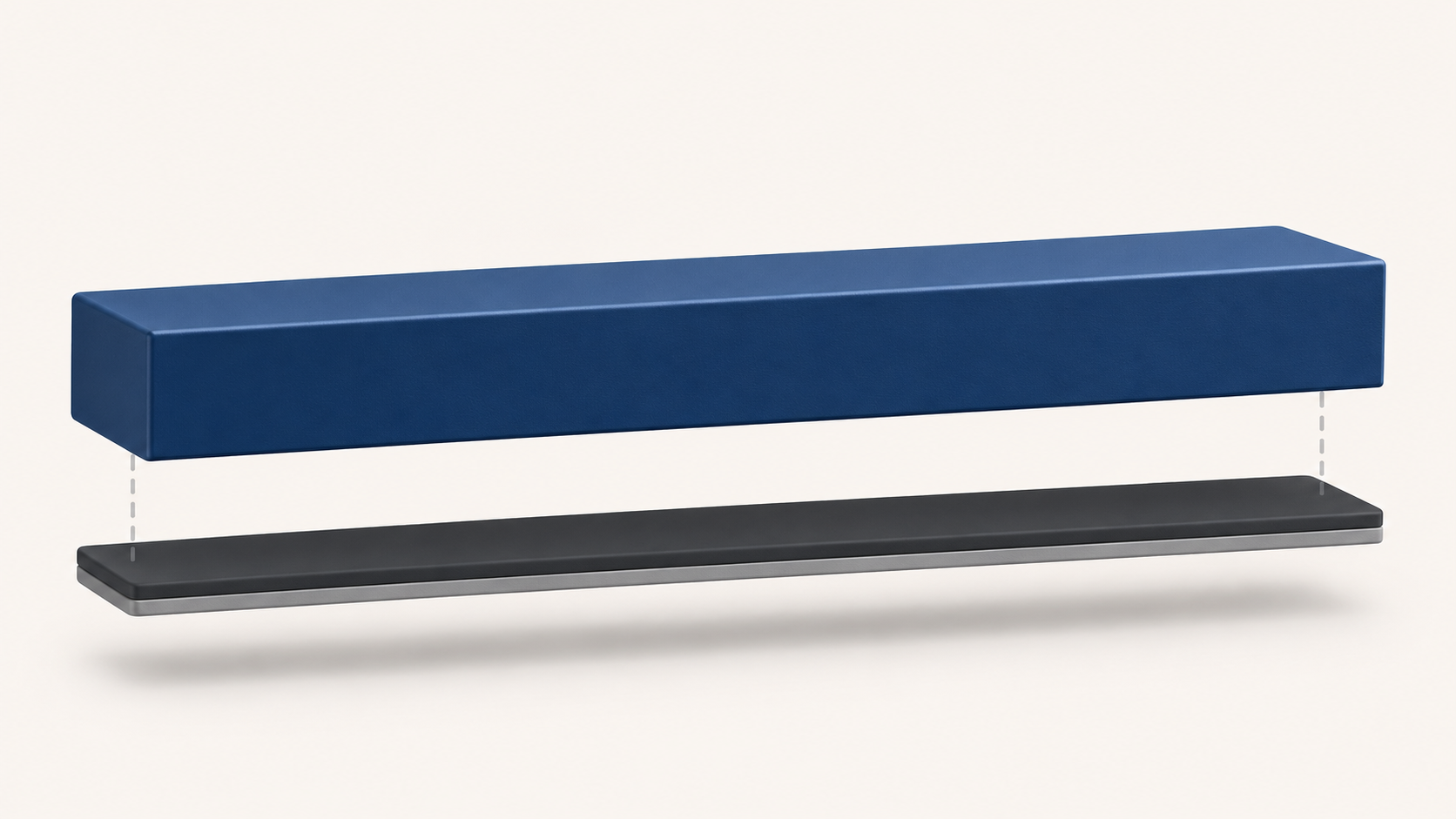
A quick-change system can use a platen that stays mounted on the machine and a removable insert. Check the machine records to identify the installed assembly and confirm the insert grade with the equipment documentation.
Record the machine and installed insert
Begin with the machine model and serial number, then record the exact sanding head and whether it works on the top or bottom face where applicable. Capture the platen assembly reference, existing insert number, drawing revision, working width and attachment interface. Ask maintenance for a marked drawing or a photo from an authorized inspection when the assembly position is unclear.
Record the job of the sanding head
Calibration sanding establishes panel thickness, while fine sanding addresses marks from preceding stages and prepares the required surface. Identify the role of the head under review, the panel types run on the line and the surface or thickness requirement that the head must help deliver. Record the current abrasive belt specification and the insert grade if known. An insert’s working width alone gives purchasing too little information to select a grade or verify fit.
Set the scope of the request
For a conversion, have the OEM or a qualified engineering team verify the installed configuration, proposed interfaces and applicable machine requirements. Agree on who will carry out installation and validate the result. Define the acceptance criteria before ordering, such as panel thickness variation and visible surface defects on an agreed trial panel. Use the plant’s approved test procedure and compare representative panels produced under comparable conditions.
A useful first RFQ states which sanding head is involved, what remains installed and what is being purchased. Attach the best available identification evidence and ask the supplier to flag any missing information before quoting.
| Request | Information purchasing should provide |
|---|---|
| Reorder an insert for a verified quick-change assembly | Machine and head ID, installed assembly reference, current insert part number and grade, quantity and delivery date |
| Identify an insert with a missing reference | Assembly drawing or clear identification photos, working width, attachment details and sanding duty |
| Convert an existing sanding head | Existing head and platen documentation, proposed assembly scope, mounting interface, available clearance, service access and required surface results |